

在GRE数学中,代数考查内容:1. Operations with Algebraic expressions;2. Rules of Exponents;3. Solving Linear Equations;4. Solving Quadratics Equations;5. Solving Linear Inequalities;6. Functions;7. Applications;8. Coordinate Geometry; 9. Graph of Functions。这里为大家重点介绍的是GRE数学知识点之代数中的坐标几何,一起来看看吧。
1. Coordinate Geometry
xy-coordinate system or xy-plane xy坐标系或xy平面
x-axis x轴
y-axis y轴
the origin 原点
quadrants I, II, III, and IV 象限
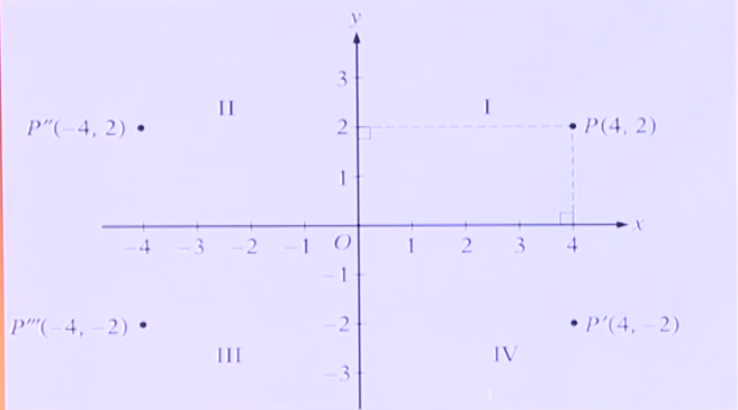
p’ is the reflection of P about the x-axis, P’ and P are symmetric about the x-axis
P’’ and p are symmetric about the y-axis
P’’’ and p are symmetric about the origin.
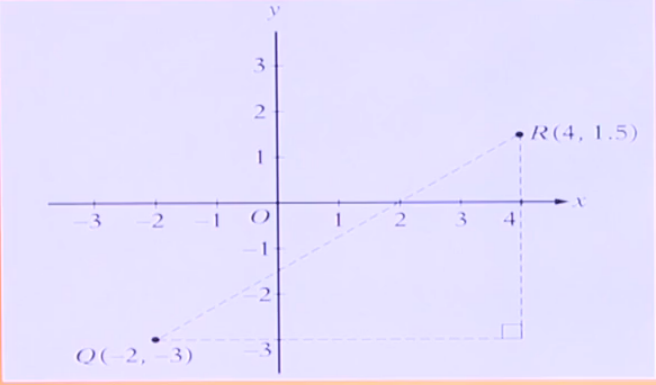

Slope: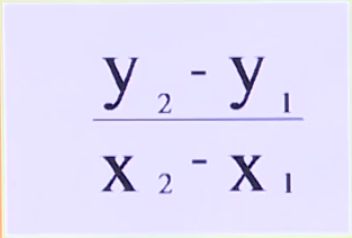
Two lines are parallel if their slops are equal.
Two lines are perpendicular if their slops are negative reciprocals of each other.
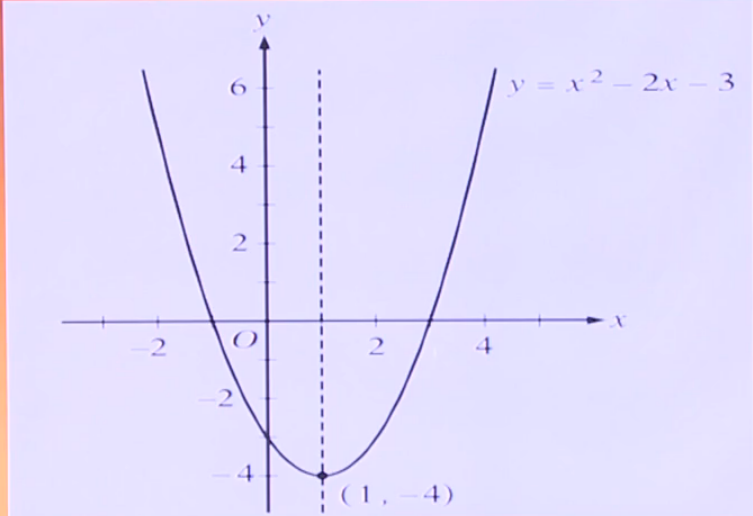
The graph of a quadratic equation of the form
y=ax2+bx+c
If a is positive, the parabola opens upward and the vertex is its lowest point;
If a is negative, the parabola opens downward and the vertex is its highest point;
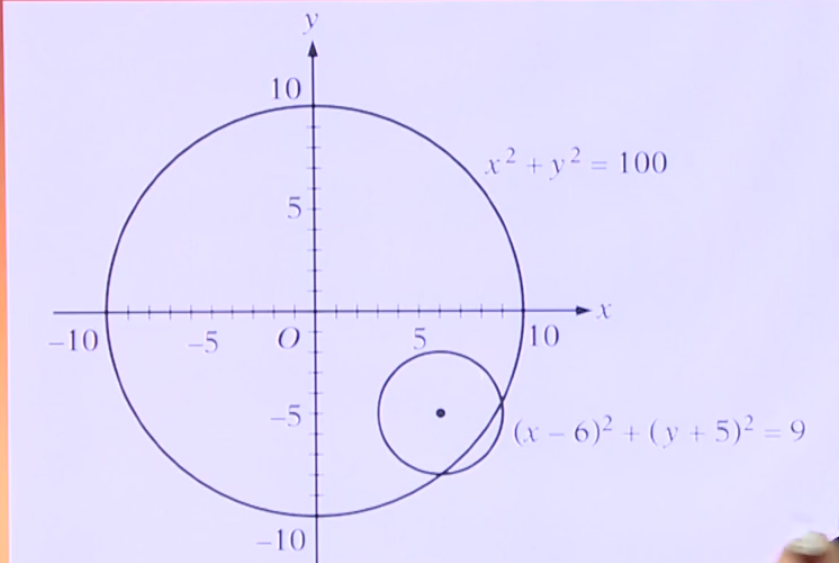
(x-a)2-(x-b)2=r2
The graph of an equation of the form is a circle with its center at point (a, b) and with radius r.
2. Graphs of Functions
Example 1: Consider the linear function defined by f(x)=-1/2x+1
Consider the quadratic function defined by the graph g(x)=x2 is the parabola.
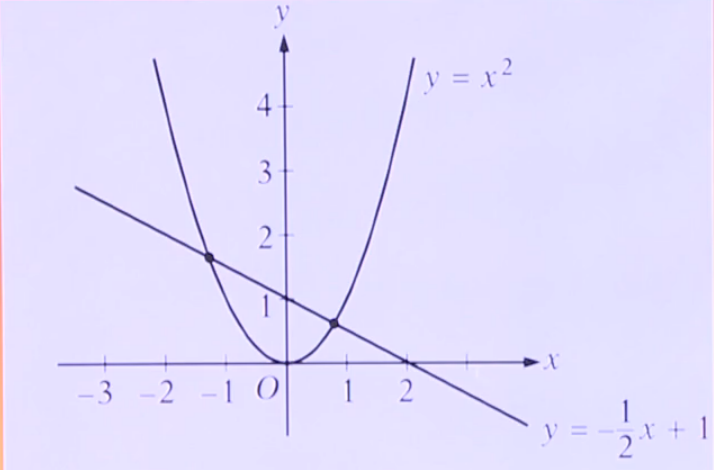
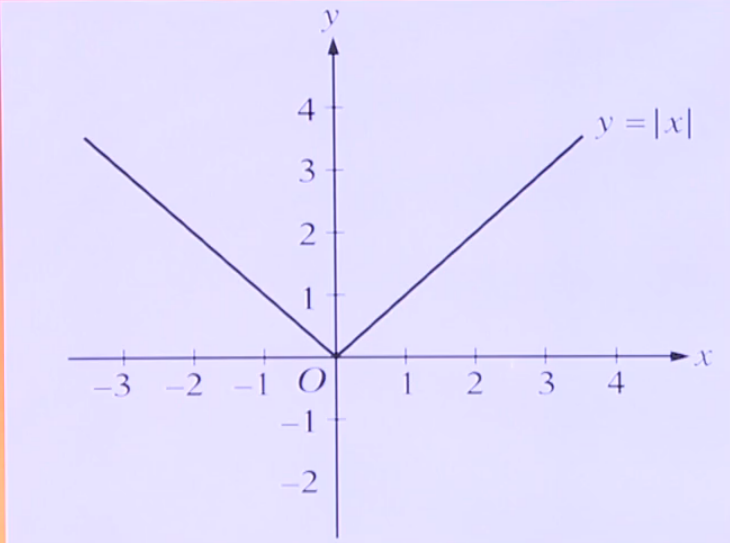
Example 2: Consider the absolute value function defined by using h(x)=I x I.
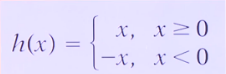
By using the definition of absolute value, h can be expressed as a piecewise-defined function:
Example 3: Consider the positive square-root function defined by for j(x)= √x (x≥0) whose graph is half of a parabola lying on its side.
Also consider the negative square-root function defined by for k(x)= -√x (x≥0) whose graph is the other half of a parabola lying on its side the dashed curve below the x-axis.
Both graphs are shown in the figure below, along with the parabola ( with its left half dashes).
结论:
y=-√x is the reflection of y=√x about the x-axis.
In genenral, for any function h, the graph of y=-h(X) is the reflection of the graph of y=h(x) about the x-axis.
Example 4: Consider the functions defined by f(x)=I x I+2 and g(x)=(x+1)2
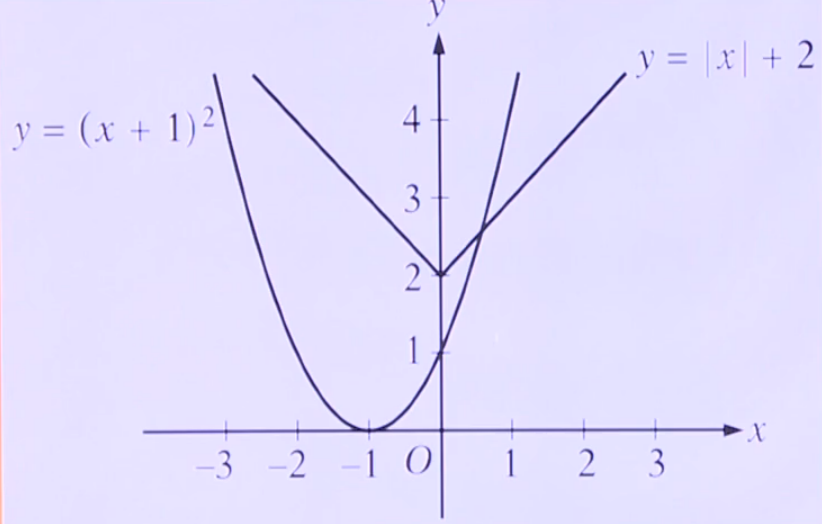
结论:
In general, for any function and any positive number c, the following are true.
The graph of h(X)+c is the graph of h(X) shifted upward by c units.
The graph of h(X)-c is the graph of h(X) shifted downward by c units.
The graph of h(X+c) is the graph of h(X) shifted to the left by c units.
The graph of h(X-c) is the graph of h(X) shifted to the right by c units.
以上就是GRE数学知识点之代数视频讲解的全部内容,希望对大家有帮助。
您还可能关注:


